Entra ID Example using SAML
This section describes how to integrate MFT Server Web SSO using SAML with Microsoft Entra ID. This example provides step-by-step instructions on how to set up the application in Microsoft Entra admin center and in the MFT Server Manager. When complete, an MFT Server user will be able to log in to the MFT Server Web Client application using Microsoft Entra ID.
The images provided under the Entra ID Instructions are taken from the Microsoft Entra admin center. Most images are snippets and not the complete page.
MS Entra ID Instructions
Integrating JSCAPE Web SSO (SAML) with Entra ID requires adding an application from the Microsoft Entra admin center app gallery. The application that will be added is called Microsoft entra SAML Toolkit, which comes from Microsoft. The steps below will show how to add said application and configure it to work when signing in to the MFT Server Web Client.
-
Log in to your Microsoft Entra admin center.
-
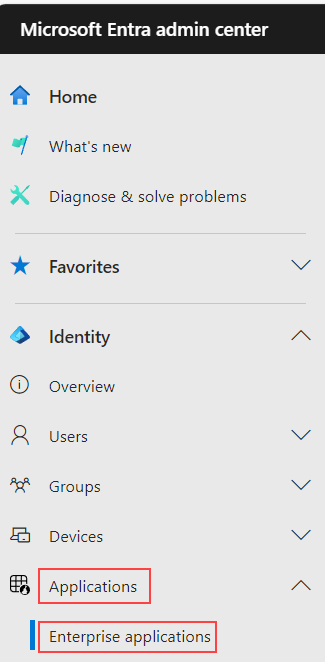
On the left-side menu, click on Applications > Enterprise applications.
-
On the
Enterprise applicationsscreen, click onNew application.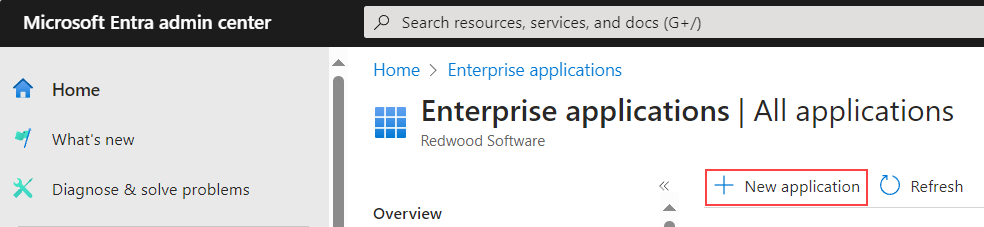
-
On the
Browse Microsoft Entra Galleryscreen, enterMicrosoft Entra SAML Toolkitin the Search application field, then click on theMicrosoft Entra SAML Toolkitapplication when it appears in the results list.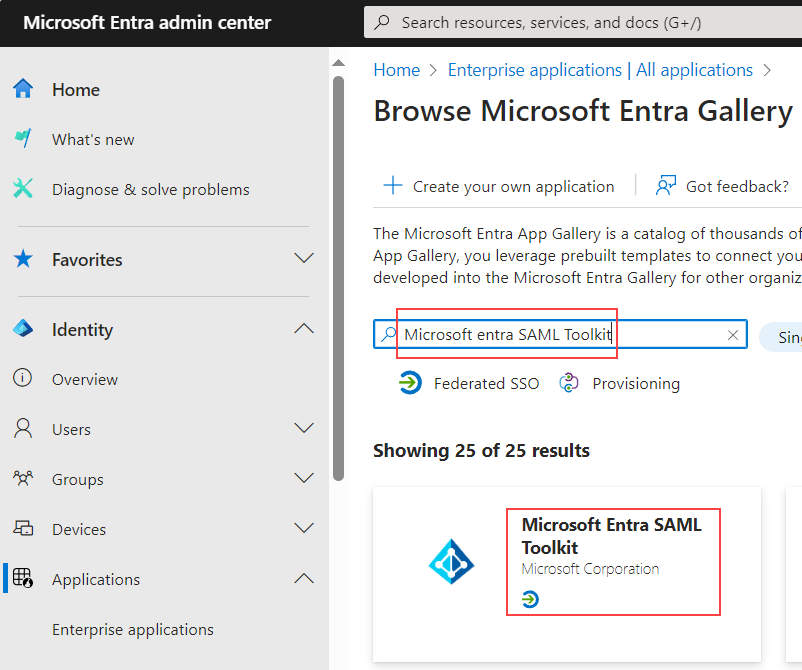
-
Enter an appropriate name in the
Namefield (in this example, the name is JSCAPE MFT SSO SAML). Next, click on theCreatebutton. It may take a few seconds for the application to be added. Wait until the next screen appears.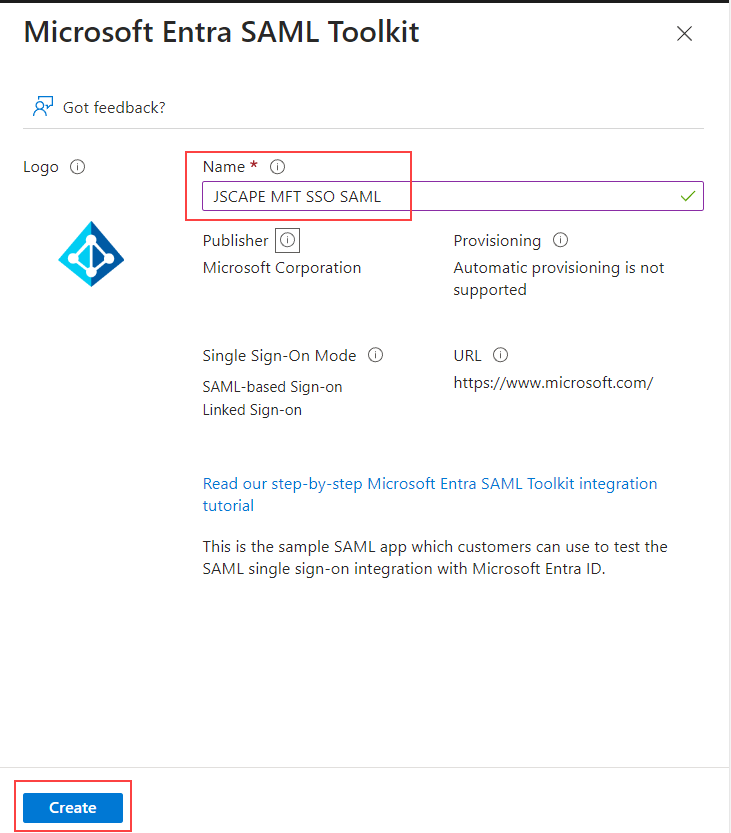
-
Click on
Single sign-onitem under theManagesection found on the left-hand side .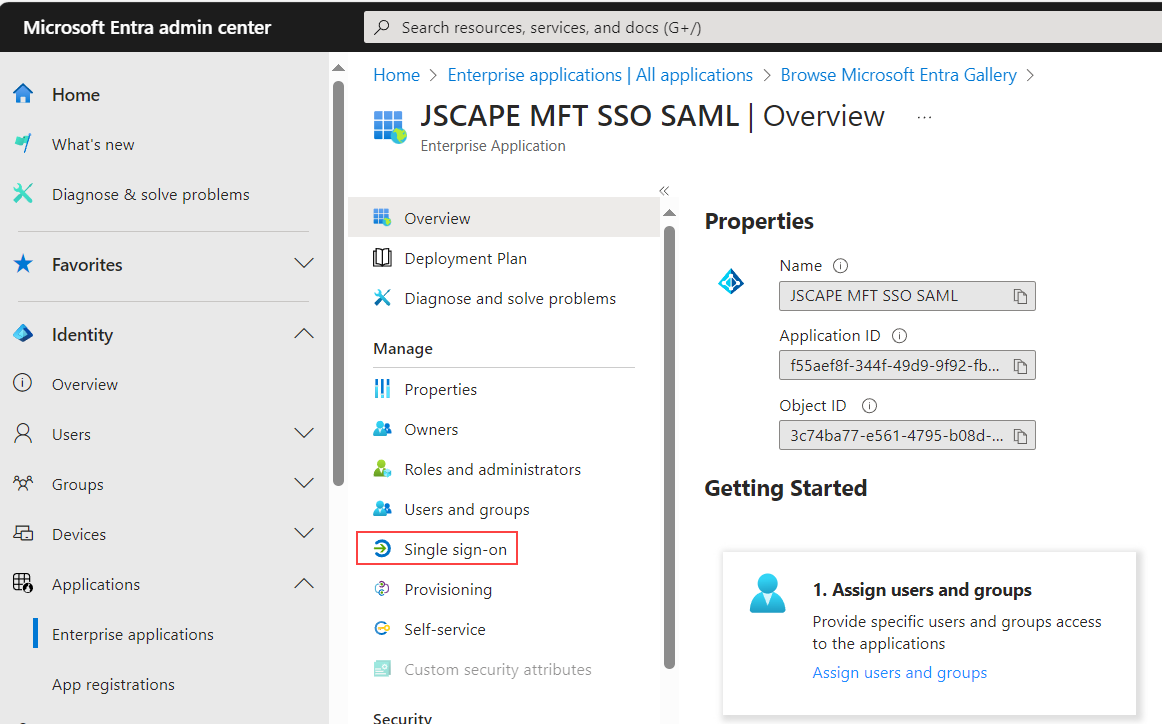
-
Click on the
SAMLtile underSelect a single sign-on methodscreen.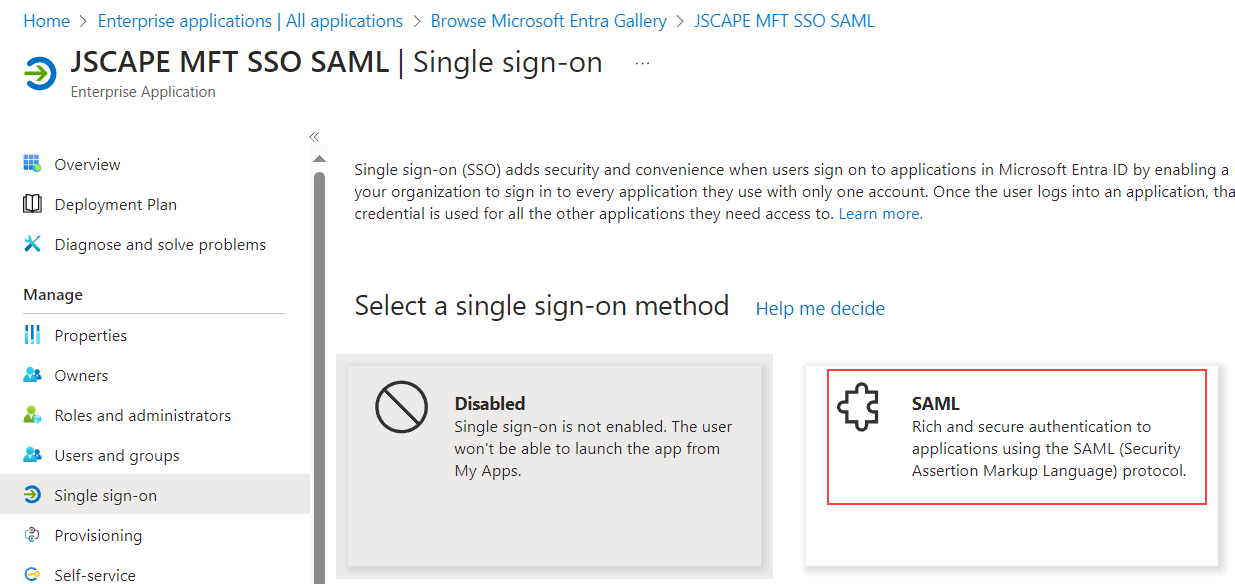
-
On the
Set up Single Sign-On with SAMLscreen, click on theEditbutton to the right of theBasic SAML Configurationsection.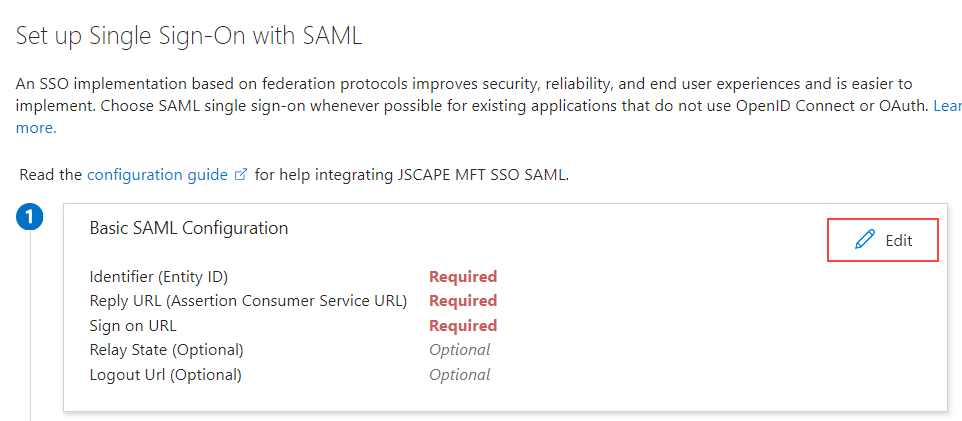
-
On the
Basic SAML Configurationscreen, replace the default value with "https://jscapehost/sso/jscapedomain/login" URL underIdentifier (Entity ID)list. Replace "jscapehost" and "jscapedomain" accordingly to what is appropriate for your ActiveMFT environment. Enter the same URL into theReply URL (Assertion Consumer Service URL)andSign on URLfields. Click theSavebutton.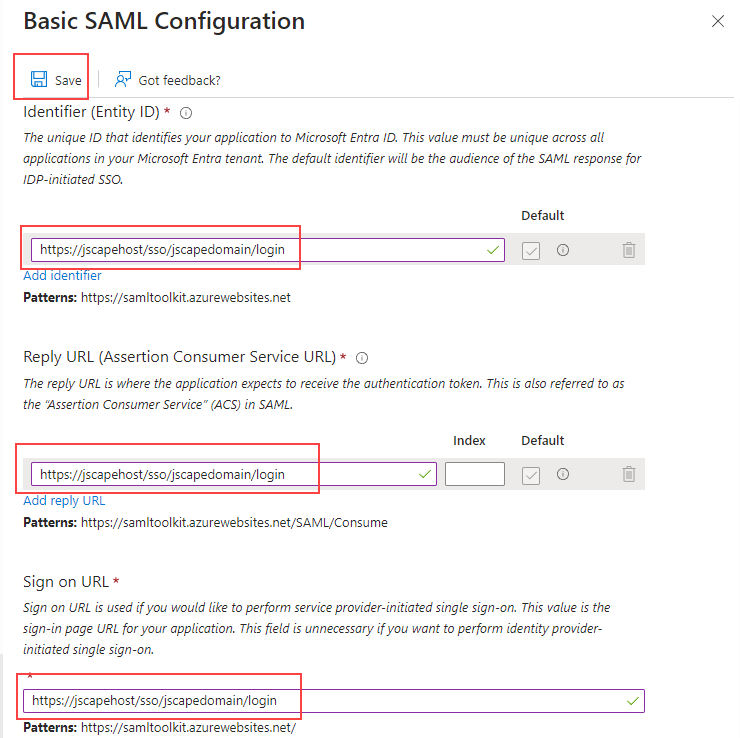
-
It may be necessary to manually close the
Basic SAML Configurationscreen if it does not automatically close after clicking on theSavebutton. Click on theXbutton to do this.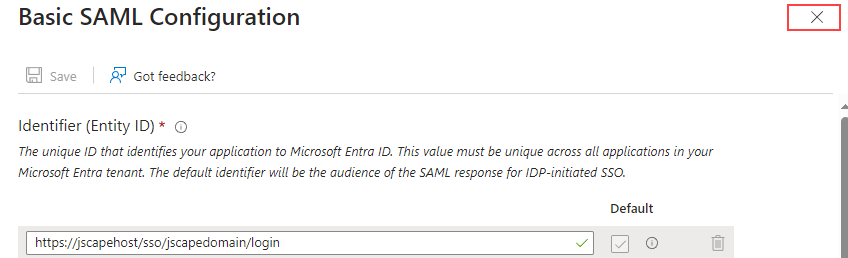
-
Once you are back on the
Set up Single Sign-On with SAMLscreen, click on theEditbutton to the right of theUser Attributes & Claimsheading.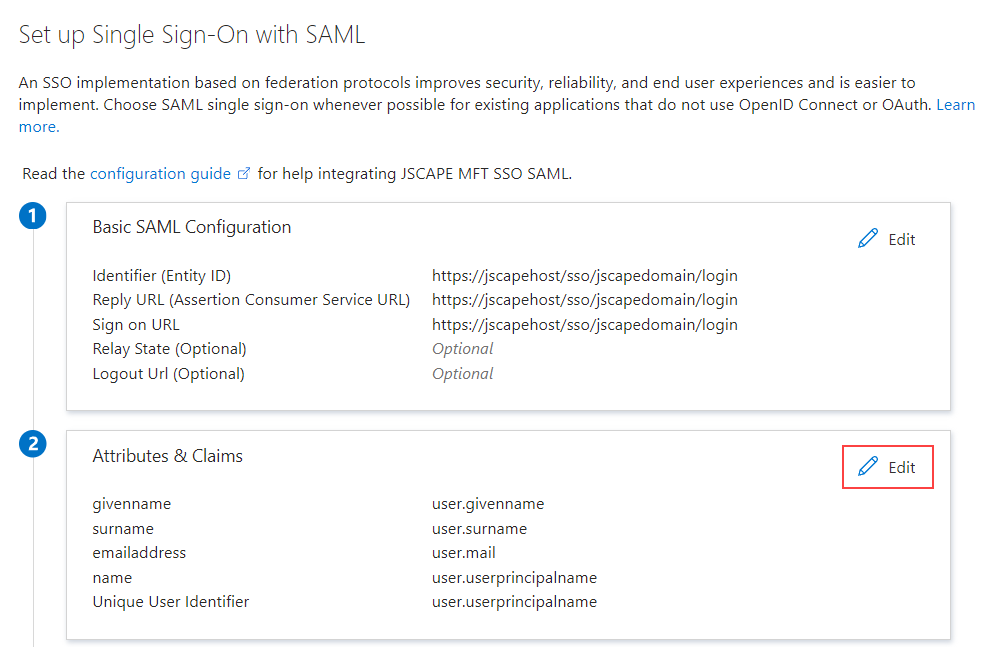
-
On the
User Attributes & Claimsscreen, click on the value beside theUnique User Identifier (Name ID)claim name. The default value isuser.userprincipalname [nameid-format:emailAddress] and it will becomeuser.mail [nameid-format:persistent]after making changes on the next screen.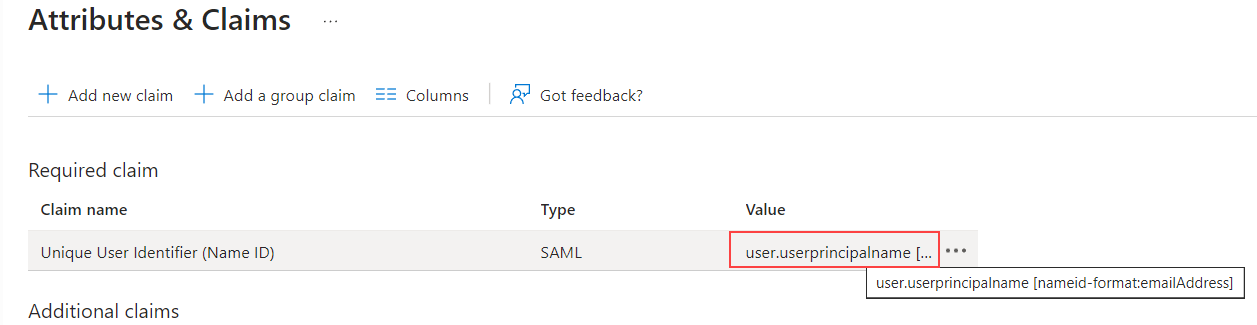
-
On the
Manage claimscreen, change theName identifier formatdropdown field fromEmail addresstoPersistentand change theSource attributedropdown field fromuser.userprincipalnametouser.mailthen click on theSavebutton.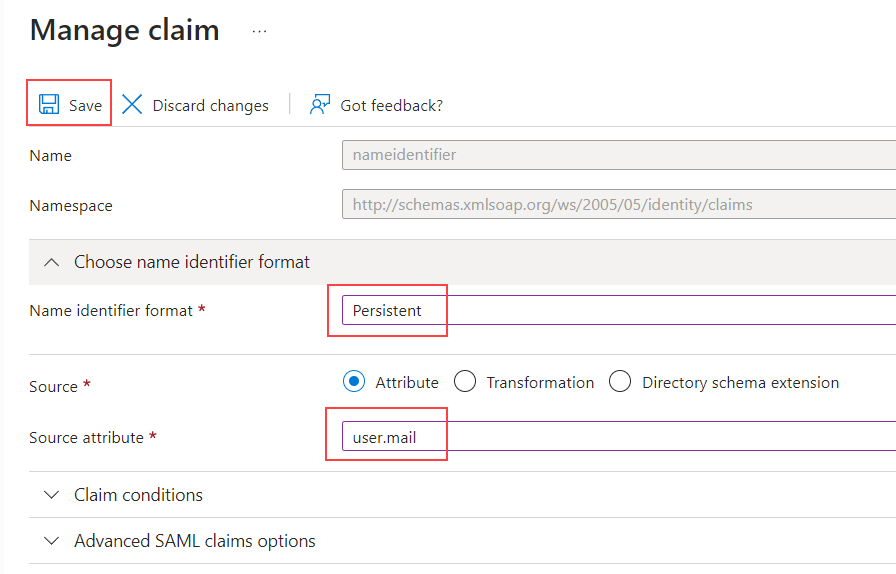
-
Click on the
SAML-based Sign-onlink once you are back on theUser Attributes & Claimsscreen.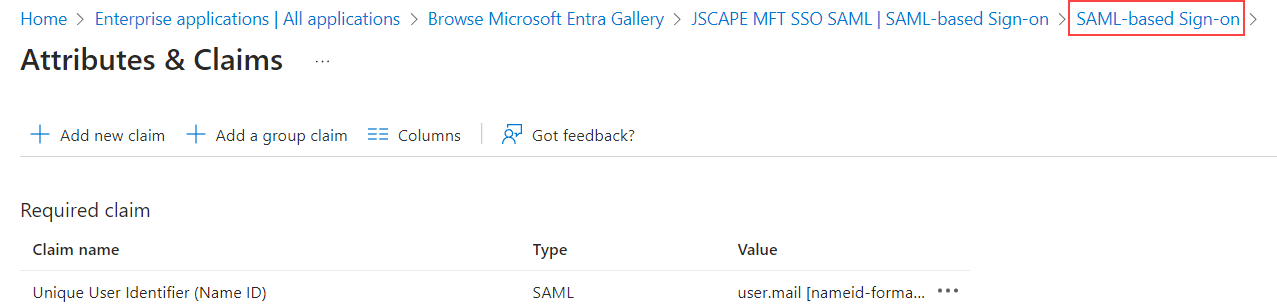
-
On the
SAML-based Sign-onscreen, click on theDownloadlink besideCertificate (Raw)field under theSAML Signing Certificatesection. The resulting certificate file will be used in the succeedingJSCAPE Configurationsection of this article.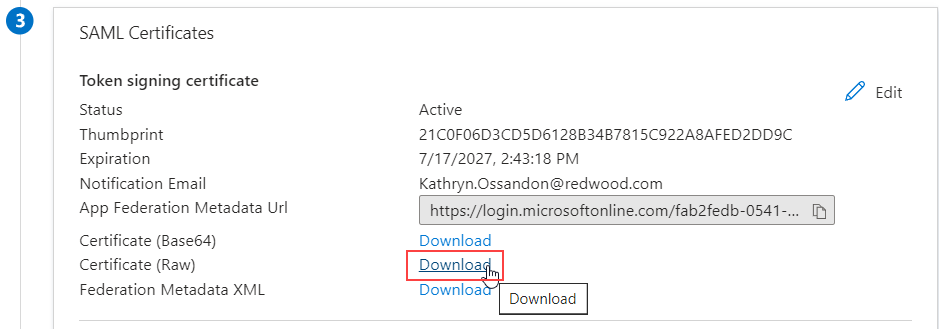
-
Click on the
Copy to clipboardicon to the left of theLogin URLfield, located under theSet up <NAME>section. NAME will be whatever you entered in step 5. TheLogin URLwill be used in theJSCAPE Instructionssection located below.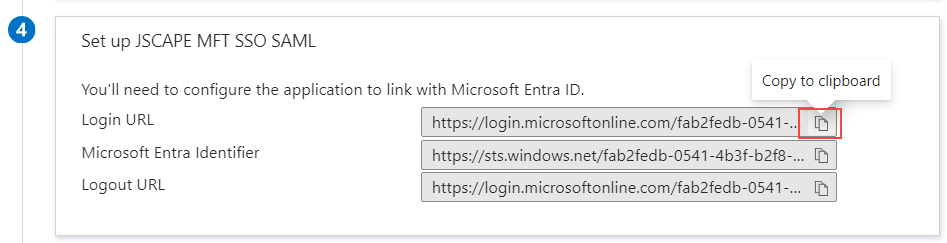
-
The final step requires that you add users and/or groups to the application. Click on the
Users and groupsitem under theManagesection, then click on theAdd user/groupbutton. Proceed to add users/groups.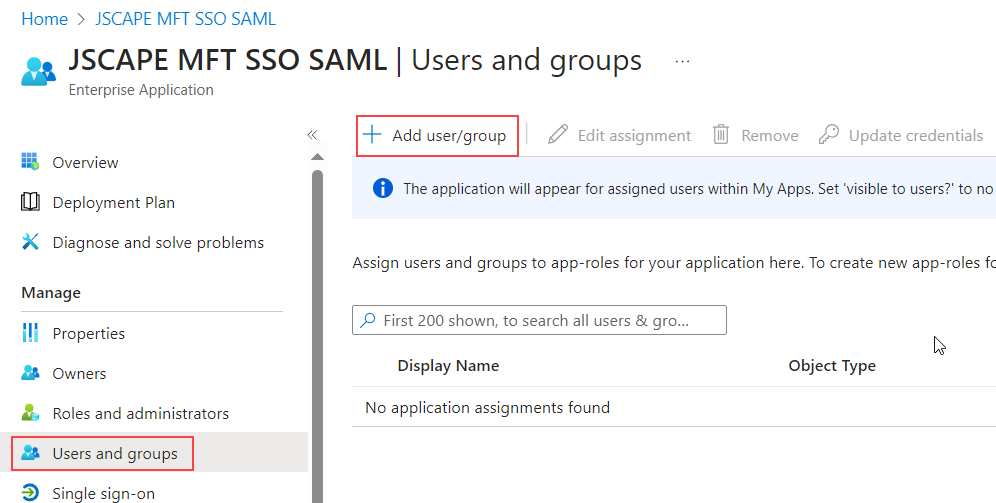
JSCAPE Instructions
-
Launch the MFT Server Manager. Navigation to the
Keys > Host Keysmodule, then click on theImportbutton and selectImport File. -
On the
Import Public Keydialog, enter an appropriate alias in theKey aliasfield. It could be anything. Click on theChoose Filebutton and find the certificate file you downloaded in step 15, then click on theOKbutton. -
Open the appropriate domain and go to the
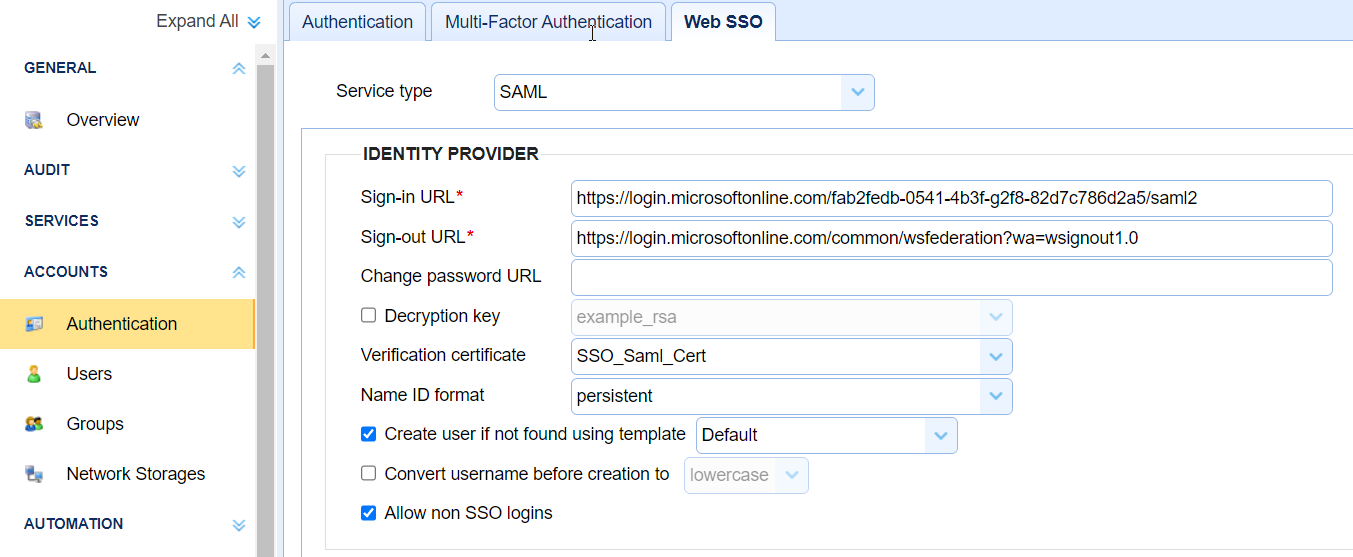
ACCOUNTS > Authentication > Web SSOtab. ChooseSAMLfrom theService typedropdown list. -
Under the
IDENTITY PROVIDERsection, theSign-in URLshould be set to theLogin URLcopied from step 17. TheSign-out URLshould be set to "https://login.microsoftonline.com/common/wsfederation?wa=wsignout1.0". TheVerification certificatedropdown list should be set to the certificate imported in step 2. TheName ID formatdropdown list should be set topersistent. The rest of the fields can be left to their default values. Click on theApplybutton.
Test SSO login by accessing the URL: https://jscapehost/sso/jscapedomain/login
Replace "jscapehost" and "jscapedomain" accordingly.